The Bridle Path — Specialist Domestic Abuse & Sexual Violence Initiative
The Bridle Path is a specialist domestic abuse and sexual violence initiative for rural and equestrian communities, including farming families, where animals, land, isolation, and community pressures can create unique barriers to safety, support, and recovery.
The Bridle Path is building a stronger evidence base around these rural, farming and equestrian barriers.
Who We Are
The Bridle Path is a specialist domestic abuse and sexual violence initiative for rural and equestrian communities, including farming families, where animals, land, isolation, and community pressures can create unique barriers to safety, support, and recovery.
Most domestic abuse services are built for towns and cities. We are built for fields, stables, remote lanes and farming communities. We understand your world because we live in it too.
We are building a specialist rural and equestrian response that understands how abuse can become entangled with animals, land, housing, livelihood, family businesses and community visibility. Right now we provide safe enquiries, information and specialist signposting, alongside professional training, research and partnership development.
The Bridle Path is currently in a development and readiness phase. Direct survivor casework and recovery programme delivery are not yet open. We will only expand into those services once the Board has approved the required safeguarding, supervision, referral, information-governance, insurance and operational arrangements.
The Bridle Path is a specialist domestic abuse and sexual violence initiative for rural and equestrian communities, including farming families, where animals, land, isolation, and community pressures can create unique barriers to safety, support, and recovery.
A future where survivors in rural, farming and equestrian communities are seen, believed and supported — where no one has to choose between their safety and the animals, land or life they love.
What We Offer
The Bridle Path is growing in stages. We want people to know exactly what is available now, what is in development, and where established specialist services may be the safest route.
Contact us if you are affected by domestic abuse or sexual violence in a rural, farming or equestrian setting. We can listen to the nature of your enquiry, share relevant information and help identify established specialist services.
This is not an emergency or crisis service and is not monitored in real time.
Practical information shaped by the realities of rural life: isolation, transport, tied housing, family farms and businesses, financial dependence, animals, livestock and community visibility.
Our planned specialist advocacy and safety-support pathway for rural, farming and equestrian survivors. It is being developed with safeguarding, referral, supervision and secure case-management arrangements built in from the start.
Direct casework is not yet open.
Our structured survivor recovery programme in development, focused on understanding abuse, rebuilding identity and confidence, and recovering in a way that reflects rural, farming and equestrian realities.
Programme delivery is not yet open. You can register interest.
Training and briefings for equestrian, farming, rural and safeguarding professionals on recognising abuse, understanding rural barriers, responding safely and improving referral pathways.
Evidence-building, sector engagement and collaboration to improve understanding of domestic abuse and sexual violence in communities that are too often missing from mainstream research and service design.
Recovery Programme
Understand what happened.
Recover your voice.
Rebuild on your terms.
Reclaiming My Path is being developed for survivors whose experiences cannot be separated from the world around them — horses, livestock, land, rural isolation, family businesses, tied housing, money and community pressure.
The programme will help survivors understand patterns of domestic abuse and coercive control, recognise what has happened to them, rebuild confidence and identity, strengthen boundaries and move towards a life that feels like their own again.
Reclaiming My Path is currently in development and is not yet being delivered. Registering interest does not create a casework or therapeutic relationship.
Register Your Interest"Beyond the silence lies safety — because every survivor deserves to be heard, believed and supported."— The Bridle Path
Our Model
The Bridle Path is being built around a simple principle: support should understand the whole rural life around a survivor, not ask them to leave that reality at the door.
Who We Exist For
The Bridle Path exists for adults affected by domestic abuse or sexual violence in rural, farming and equestrian communities — women, men, older people, horse owners, farming families, workers and people whose animals, home or livelihood are part of what makes seeking help complicated.
People whose horses have been threatened, controlled, sold, withheld or used to frighten them or prevent them leaving.
People living with distance, limited transport, poor connectivity, community visibility or reduced access to specialist services.
People whose safety is tied to land, livestock, family businesses, income, inheritance, tied housing or a shared rural livelihood.
Grooms, riders, instructors, yard staff, owners and others whose personal and professional worlds may overlap within a close-knit community.
Older people experiencing abuse from a partner, ex-partner, relative or other personally connected person, including economic abuse, coercive control and neglect.
Men and others who may face disbelief, stigma or services that do not feel designed for them. Our work is intended to be inclusive and survivor-centred.
You do not have to be ready to leave or report to police to seek information. Where we are not the right service, we will help identify an established specialist route.
Friends, relatives and professionals who are worried about someone and need information about safe, appropriate specialist support.
Our Founder
Kirsty is a qualified Independent Domestic Violence Adviser (IDVA) and Independent Sexual Violence Adviser (ISVA) with frontline experience supporting people affected by domestic abuse and safeguarding concerns.
She has supported survivors with safety planning, risk assessment, criminal justice advocacy and trauma-informed support across a range of settings. Her specialism lies in understanding and addressing the unique barriers faced by survivors in rural and equestrian communities — including geographic isolation, economic dependency on land and animals, and the use of horses and livestock as tools of coercive control.
Kirsty founded The Bridle Path after repeatedly seeing how rural, farming and equestrian realities can fall outside the shape of mainstream provision. For some survivors, leaving is not only about a relationship: it can involve animals, land, livelihood, tied housing, transport, money and an entire community noticing that something has changed.
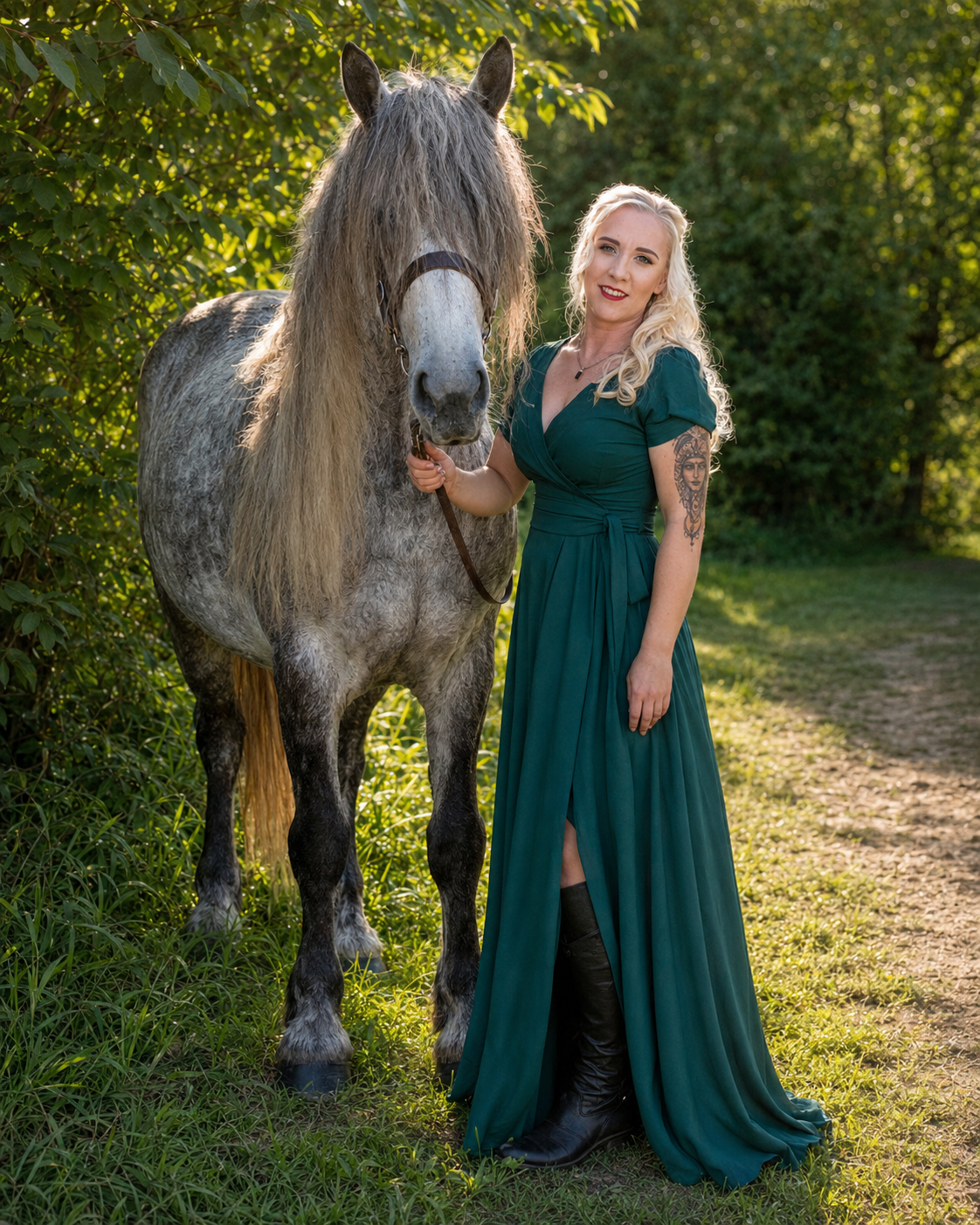
Kirsty — Founder, Speaker & Author
She is an equestrian herself. She understands your world because she lives in it too.
"I started The Bridle Path because I kept seeing survivors whose whole lives sat outside the usual picture of leaving abuse — horses that still needed feeding, livestock, land, housing, money, work and a community that would notice every move. I wanted to build something that understood the whole picture."
Research & Evidence
UK research already tells us that rurality can create additional barriers to help-seeking, while wider domestic-abuse research recognises that animals can be used within coercive and controlling behaviour. But there is still limited evidence focused specifically on equestrian, farming and rural lived experience. We want to help change that.
Our survey is designed to help build a dedicated evidence base that can inform service design, professional training, partnerships and future policy work.
The survey does not ask for your name. Please do not include names, addresses or other identifying information in free-text answers. You can stop at any time.
⚠️ The survey contains questions about domestic abuse and sexual violence. If anything raises difficult feelings, you can leave it at any time and use the specialist support contacts on this website.
Take The Survey →Professional or research enquiry? Email enquiries@thebridlepath.co.uk to discuss collaboration.
For Professionals
People working around farms, yards, animals, housing, health and rural communities may notice something long before a survivor reaches a specialist domestic-abuse service. Our training helps professionals recognise the rural context and respond without increasing risk.
Core awareness training on domestic abuse in rural, farming and equestrian communities.
Focused briefings for particular professional groups that need practical, role-specific awareness.
Deeper sessions for services that already understand domestic abuse but want to strengthen their response to rural and equestrian cases.
Tailored work for organisations reviewing policy, safeguarding, referral pathways or service design for rural and equestrian communities.
Get Support
Email: enquiries@thebridlepath.co.uk
What we can offer now:
Safe initial enquiries, rural/equestrian information and specialist signposting.
Response aim:
Within 2 working days during working hours.
Please use a safe email account if someone may monitor your devices. In your first email, you can simply tell us what type of help you are looking for and whether it is safe to reply. You do not need to send detailed personal information.
We treat enquiries carefully and confidentially, but there are limited circumstances where information may need to be shared to protect someone from serious harm or because the law requires it.
National Domestic Abuse Helpline (women):
0808 2000 247
Free, 24 hours a day
Men's Advice Line:
0808 801 0327
Monday–Friday, 10am–5pm
Rape Crisis England & Wales:
0808 500 2222
Free, 24 hours a day
Hourglass — abuse of older people:
0808 808 8141
24 hours a day
For Professionals & Partners
The Bridle Path works with equestrian organisations, rural employers, farming networks, DA services, healthcare providers, housing teams and statutory agencies to raise awareness, strengthen responses and improve outcomes for survivors in rural, farming and equestrian communities.
Equestrian organisations, yard managers, BHS coaches, vets, farriers, rural GPs, farming charities, housing associations, police rural crime teams, safeguarding professionals and DA service staff wanting to understand rural and equestrian survivor needs.
Awareness training, professional development, bespoke consultancy, policy development, referral pathway development, research collaboration, joint awareness raising and advisory input. Training is available online or in person, UK-wide.
Contact us at enquiries@thebridlepath.co.uk to discuss your organisation's needs. We offer an initial conversation at no cost. Training fees are available on request and are priced accessibly for smaller organisations.
Current status: The Bridle Path is an emerging specialist organisation building its evidence base, partnerships and survivor-service infrastructure. Professional training, research and partnership work are available now. Direct survivor casework is not yet open.
Enquire NowPartnerships
The Bridle Path welcomes partnership enquiries from organisations working in domestic abuse, rural communities, equestrian welfare, farming support, housing, health, policing and safeguarding. We are particularly interested in connecting with organisations that share our commitment to reaching survivors currently underserved by mainstream provision.
Building safe, clear referral relationships with established DA services, rural charities and animal/equestrian organisations.
Co-developing and co-delivering training for equestrian, rural and farming professionals.
Collaborating on research into domestic abuse in rural and equestrian communities — an area where more focused evidence is needed.
Joint campaigns, events, publications and communications to raise awareness in our shared communities.
Sharing expertise to inform policy, practice and service development in rural and equestrian settings.
To discuss a partnership contact us at enquiries@thebridlepath.co.uk
Discuss PartnershipPublished Works
Kirsty writes from both professional expertise and lived experience — across memoir, practical survivor guidance, domestic abuse in later life and equestrian fiction. Her books are written to help people feel understood, informed and less alone.
Press & Media
The Bridle Path welcomes press, podcast and media enquiries. Our founder Kirsty Judd is available for interviews, podcast conversations, comment and feature contributions on domestic abuse in rural, farming and equestrian communities.
Kirsty speaks from professional domestic-abuse and safeguarding experience, lived experience and a longstanding connection to the equestrian world. Her media work focuses on the barriers that can make abuse harder to recognise, disclose and escape in rural, farming and equestrian communities.
Featured Podcast
Kirsty joined The Story Behind My Stories to speak openly about lived experience, domestic abuse, survival and recovery — and the journey that ultimately led to The Bridle Path Initiative.
Listen to the full conversation or watch the interview.
Kirsty Judd IDVA ISVA
Founder — The Bridle Path
Send Press EnquiryKirsty's writing on domestic abuse in rural and equestrian communities can be read at substack.com/@kirstymartine
The Bridle Path Substack publishes regular writing on domestic abuse in rural, farming and equestrian communities — including survivor perspectives, professional guidance and policy analysis. Visit substack.com/@kirstymartine
Downloads
The Bridle Path Initiative publishes evidence, policy statements and professional resources to support awareness, training and legislative change around domestic abuse in rural, farming and equestrian communities.
A parliamentary-level position statement examining how animal abuse in domestic abuse contexts is routinely recorded as criminal damage rather than recognised as coercive control — and what needs to change. Prepared for parliamentary, policy and professional audiences.
A practical guide for vets, farriers, yard managers, riding instructors and rural professionals on recognising domestic abuse in equestrian and farming settings.
Findings from The Bridle Path survey on domestic abuse in equestrian and rural communities — building the evidence base that will inform training, policy and service development.
Safeguarding
Safeguarding is central to how The Bridle Path is being developed. We are deliberately staging our services so that we do not promise direct work before the necessary governance, safeguarding, supervision, information-security, referral and insurance arrangements are in place.
Board safeguarding oversight and a designated safeguarding lead
Safeguarding policy and safer-recruitment arrangements under Board review/approval
Sensitive survivor casework is not being held in an ordinary CRM while secure systems are developed
Emergency and specialist services remain the right route for urgent or direct support
To raise a safeguarding concern connected with The Bridle Path, or request a copy of our safeguarding policy once adopted, contact enquiries@thebridlepath.co.uk. If someone is in immediate danger, call 999.
Get In Touch
You can keep the first message short. Tell us whether it is safe to reply and what kind of help you are looking for. Please avoid sending unnecessary sensitive detail.
Email a Safe EnquiryTell us about your organisation, audience and what you would like to explore.
Professional EnquiryUse the same email address and put the type of enquiry in the subject line.
enquiries@thebridlepath.co.uk →Important: Email is checked during working hours and is not an emergency channel. We aim to respond within 2 working days.
We will read your enquiry and respond within the limits of our current service. For survivor enquiries, that currently means information and specialist signposting rather than accepting a case for ongoing advocacy.
We have removed the previous website form while we strengthen our information-governance arrangements for sensitive survivor information. This reduces unnecessary collection of personal data.
Data & Privacy
The Bridle Path Initiative CIC takes privacy and safety seriously. This website summary explains the information we currently collect and how we try to minimise unnecessary sensitive data.
The data controller for enquiries to this website is The Bridle Path Initiative CIC, company number 17236688. Contact: enquiries@thebridlepath.co.uk.
We do not currently operate direct survivor casework through this website. Please do not send more sensitive personal information than is necessary in an initial enquiry. We have removed the previous website contact form while our secure information-governance and case-management arrangements are developed.
We use information to respond to enquiries, provide information or signposting, manage professional relationships, develop services and carry out research/evidence-building activities. Where a separate service or research activity requires additional privacy information or consent, this should be provided at that point.
We keep information only for as long as it is needed for the purpose for which it was collected and in line with our developing retention arrangements. We do not currently describe or retain website enquiries as direct casework records.
We do not routinely share personal information without a lawful reason. In limited circumstances we may need to share information to protect someone from serious harm, meet a safeguarding duty, comply with the law, or deal with a legal or regulatory requirement.
UK data-protection law gives individuals rights over their personal data in applicable circumstances. To ask about information we hold about you, request correction or raise a privacy concern, email enquiries@thebridlepath.co.uk. You can also complain to the Information Commissioner's Office.
This site does not intentionally use advertising or behavioural-tracking cookies. It is hosted by Netlify, which may process technical information such as server logs for security and service operation. External services you follow from this site, including Microsoft Forms, Amazon, Substack and Crowdfunder, have their own privacy practices.
Website privacy summary last updated August 2026. This will be reviewed as The Bridle Path's services and systems develop.
Support The Bridle Path
Behind stable doors, farm tracks and quiet village lanes, people are living with abuse that too often goes unseen. Your support helps The Bridle Path build specialist awareness, training, research and support for rural, farming and equestrian communities that have too often been left out of the conversation.
Every contribution — however small — helps fund training development, research, safeguarding and governance infrastructure, communications and the early systems needed to grow this work responsibly.
💛 Support The Bridle PathVia our Crowdfunder campaign — target £5,000
You can also support Kirsty's writing directly:
Support Kirsty's WritingBecause support doesn't stop at the gate.
From The Bridle Path
Kirsty writes about domestic abuse in rural, farming and equestrian communities — the realities, the barriers, the silences and the survivors. Read her latest pieces on Substack.
Animals & Coercive Control
For many survivors in equestrian and rural communities, the horse is not a side issue. The horse is the reason they stay.
Read on Substack →
Land & Farming
In farming communities, leaving an abusive relationship can mean losing a home, a livelihood, a generational identity and an income simultaneously.
Read on Substack →
Rural Communities
Rural isolation is not just geography. It is a weapon — and in equestrian and farming communities it is used deliberately.
Read on Substack →
Awareness
Abuse does not look the way people expect. It rarely does. And in rural and equestrian communities, the gap between expectation and reality can cost lives.
Read on Substack →
Survivor Perspective
The question that survivors are asked more than any other. The answer is never simple — and in rural and equestrian communities, it is more complicated than most people know.
Read on Substack →
Older Victims
Over one million older people experience domestic abuse in the UK every year. Most are never identified. In rural communities, they are the least likely to be seen at all.
Read on Substack →
A proposed safe, specialist rural recovery environment designed to help survivors move from escape and safety through recovery, independence and thriving. The Village is currently at feasibility, partnership and funding-development stage.
Explore the Village VisionCommission · Train · Partner · Invite
The Bridle Path works with organisations that want to strengthen how they recognise and respond to domestic abuse in rural, farming and equestrian communities. We also welcome commissioning, research, partnership, media and speaking conversations.
For rural organisations, equestrian businesses, vets, housing, health, safeguarding, farming networks and multi-agency teams.
Discuss commissioning, consultancy, service development, research, rural partnerships or the Bridle Path Village feasibility work.
Podcasts, panels, conferences, interviews, awareness events and professional speaking on rural domestic abuse and recovery.